
Wild venison certification that opens doors. Show buyers your standards and supply with confidence
All wild deer must be actively managed by trained and competent individuals, working to recognised best practice standards and legal requirements.
Processors, supermarkets, restaurants, contract caterers, and public sector buyers need certified producers at the start of the chain. BQWV certification proves your high standards and makes you the supplier they are looking for.
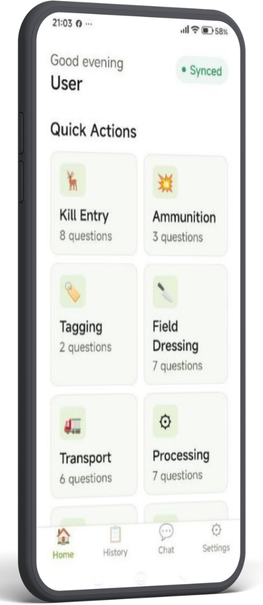
New Producer Assessment App coming soon!
BQWV certification gives producers a trusted quality mark that opens doors to markets where provenance and food safety matter.
Access to quality markets
As demand for traceable, quality-assured wild venison grows, processors supplying supermarkets, restaurants, contract caterers, and public sector buyers are increasingly seeking certified supply. BQWV certification means your venison is ready to meet that demand.
Prove your standards
The BQWV mark shows that you are trained and competent, your wild venison has been sustainably sourced, correctly handled, and independently assessed from shot to collection. Not self-certified – independently verified.
Full traceability
Every certified carcass carries full traceability through the supply chain. Buyers and processors can follow the journey of your wild venison from the field to their facility.
A mark buyers recognise
Backed by the Forestry Commission, BASC, British Deer Society, NGDA, and other leading sector bodies, the BQWV mark is recognised and trusted across the industry.
Coming Soon – Listed in the certified members directory
Once certified, your business can be listed in the BQWV certified members directory, searchable by buyers and processors looking for verified supply.
Meeting growing demand
Joining BQWV means being part of a scheme actively working to build a strong, consistent market for British wild venison, for the long-term benefit of the whole sector.
What the BQWV Producer Standard covers
All wild deer must be managed by trained and competent individuals working to recognised best practice standards within legal requirements. The standard covers every stage from the moment the deer is harvested to its arrival with a processor, providing an achievable framework for stalkers and estates while giving processors quality assurance from their supply chain.
Deer welfare is central to the scheme. All management practices must be humane, safe, and ethical, with due regard for the welfare of deer at every stage.
Requirements list:
- Deer management and population control
- Stalking competency e.g. Deer Stalking Certificate Level 2 (DSC2)
- Carcass handling best practice
- Chiller and larder management
- Transportation of carcasses
- Hygiene standards and food safety (HACCP)
- Control of hazardous substances (COSHH)
- Health and safety risk assessments
- Full traceability documentation from shot to collection
- Complaints procedure
All templates and guidance documents are available in the Group Scheme Handbook, which you can download below. If you have any questions about the requirements, contact the BQWV team before you apply.
Producer Handbook & Checklist - Prepare for your assessment
The BQWV Checklist and Producer Handbook contains all the templates and guidance you need to get your operation ready.
The handbook is designed for producers, but it is a useful reference for any producer or processor preparing for assessment.
Ready to get certified?
Find out what the process involves, what it costs, and how to apply.
New Producer Assessment App coming soon!
Find Out More
Supported & endorsed by


